

The executive order
President Trump signed the executive order on Tuesday, September 29, 2026, directing federal agencies to refer to artificial intelligence as "super intelligence", or SI, in official communications and documents, according to Politico and The Independent.
The order says the term "super intelligence" better captures the capabilities of the rapidly developing technology, which does "much more than imitate or automate discrete aspects of human intelligence", per Politico.
The White House luncheon and the accord
On Tuesday, September 29, 2026, President Trump and House Speaker Mike Johnson hosted a luncheon at the White House with leaders of the country's largest AI companies, according to CNBC and CNN.
Executives in attendance included Google CEO Sundar Pichai, Meta CEO Mark Zuckerberg, Anthropic CEO Dario Amodei, OpenAI President Greg Brockman, xAI CEO Elon Musk, NVIDIA President and CEO Jensen Huang, Palantir's Alex Karp and Shyam Sankar, and Amazon's Jeff Bezos, per ABC News and CNN.
After the meeting, Trump and six of the executives signed a two-page document titled the White House Accord on Super Intelligence, subtitled Joint Commitment on Frontier Responsibilities, according to Nextgov/FCW and CNBC. The signatories were Trump, Pichai, Amodei, Zuckerberg, Brockman, Musk and Huang, per Nextgov/FCW.
The accord calls on AI companies to have "robust internal processes and controls to ensure that their technology behaves as intended" and to submit to external audits, while leaving enforcement to the industry itself, according to USA Today and Nextgov.
Trump described the agreement as "morally binding" and a "constitution" for the companies to police themselves, and framed the light-touch approach as the way to balance safety concerns with accelerating the technology, per ABC News and CNBC.
The accord makes no declaration about the name change itself, per CNBC.
Meta CEO Mark Zuckerberg said the agreement aims to give Americans confidence through transparency, according to Fox News.
Announced in New York
Trump first announced the rebrand in his address to the United Nations General Assembly the prior week, saying the term "artificial intelligence" makes the technology "sound fake", as reported by the BBC and The Hill.
The State Department had already moved ahead of the order. Diplomats in its international organizations bureau were told to use "super intelligence" instead of "artificial intelligence" in all communications, in an email titled "Change in Nomenclature AI to SI", according to the Associated Press and Euronews.
A new portal and the China framing
The administration also unveiled America.gov, a unified digital portal described as using SI to simplify access to government services, per Open magazine.
Trump has framed the rebrand as part of the competition with China, saying "Whoever wins super intelligence, wins", per C-SPAN.
Industry reaction
Experts quoted by the BBC said the term is unlikely to gain widespread traction in the industry, because "super intelligence" is a name typically used to refer to more advanced systems, per the BBC.
How widely the label spreads beyond federal offices, documents and announcements remains to be seen.
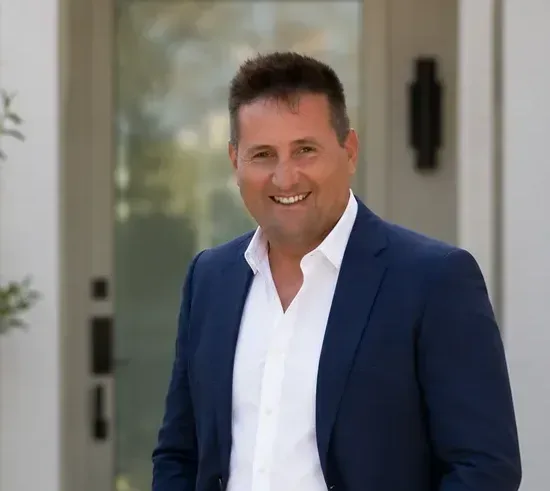
Written by
Rob Dietrich
Georgia REALTOR® with eXp Realty, AI Certified Real Estate Strategist, serving Gwinnett, Hall, Barrow and Jackson counties.
Read the full profile