Beyond the Shadow: Groundhog Day - the Georgia verdict
Beyond the Shadow: The Quirky Origins of Groundhog Day
By Rob Dietrich "Aussie Rob", AI Certified Agent™ & NE Georgia Lifestyle Specialist Rob Dietrich
![[HERO] Beyond the Shadow: The Quirky Origins of Groundhog Day](https://cdn.marblism.com/5VFim4hph5m.webp "[HERO] Beyond the Shadow: The Quirky Origins of Groundhog Day")
Every February 2nd, we collectively lose our minds over whether a rodent sees his shadow. Thousands of people gather in the freezing cold of Punxsutawney, Pennsylvania, waiting for a groundhog named Phil to emerge from his burrow and deliver the weather forecast. It's bizarre. It's wonderful. And honestly, it's peak human behavior.
But here's the thing, this quirky tradition didn't just appear out of nowhere. Groundhog Day has roots that stretch back thousands of years, crossing continents and cultures, involving badgers, ancient goddesses, and some very creative German immigrants. Let's dig into how a Celtic festival about lambs morphed into America's most beloved weather-predicting rodent show.
It All Started With the Celts (And a Goddess Named Brigid)
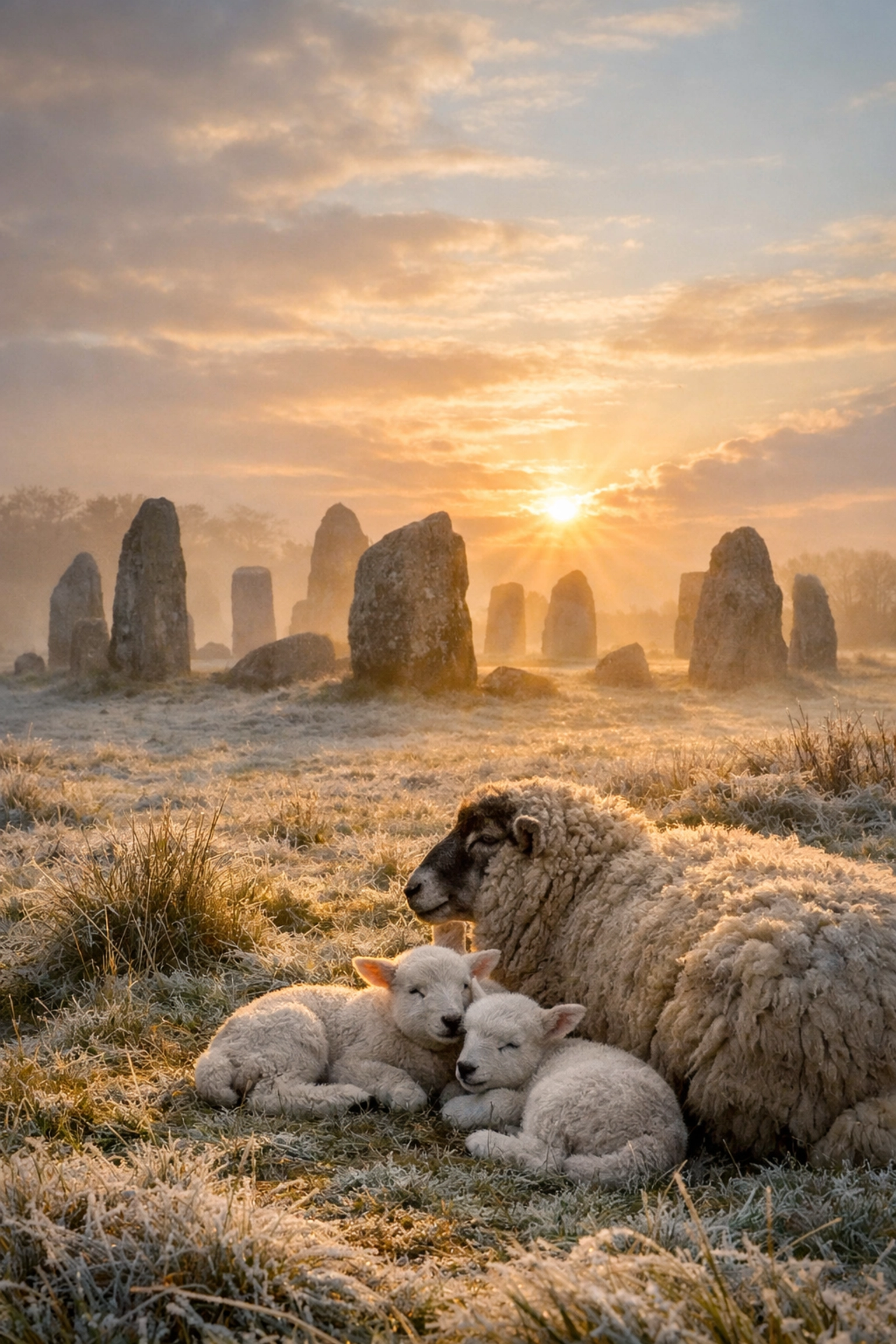
Long before groundhogs became famous, ancient Celtic communities across Europe were celebrating Imbolc on February 1-2. This wasn't just another party, it marked the midpoint between the winter solstice and the spring equinox, what's called a "cross-quarter day" in old-school calendar terms.
Imbolc was all about hope. The days were getting longer. Lambs were being born. Spring was on the horizon, even if snow was still on the ground. The Celts honored Brigid, the goddess of fertility, poetry, and fire, believing she brought light back into the darkening world. Fair dinkum, these folks knew how to celebrate the return of the sun.
The weather prediction element was already baked into the tradition. People watched for signs, clear skies or storms, to predict how much longer winter would hang around. If the weather was nice and sunny on Imbolc, they believed winter would continue. If it was cloudy and rough, spring was coming early. Sound familiar?
Christianity Swoops In: Enter Candlemas
When Christianity spread across Europe, church leaders faced a problem. The Celtic festivals were deeply woven into community life. People weren't about to give them up. So instead of banning these celebrations, the Church did what it often did, it "baptized" them, transforming pagan festivals into Christian holidays.
Imbolc became Candlemas, celebrated on February 2nd as the day Mary presented baby Jesus at the temple. The holiday kept the weather-watching tradition alive, though now with a Christian framework. European farmers still paid close attention to the weather on Candlemas, using it to forecast the remainder of winter.
A popular English saying captured the belief:
"If Candlemas be fair and bright, winter has another flight. If Candlemas brings clouds and rain, winter will not come again."
Basically, the same prediction formula we use today, just without the groundhog.
The Germans and Their Weather-Predicting Badger
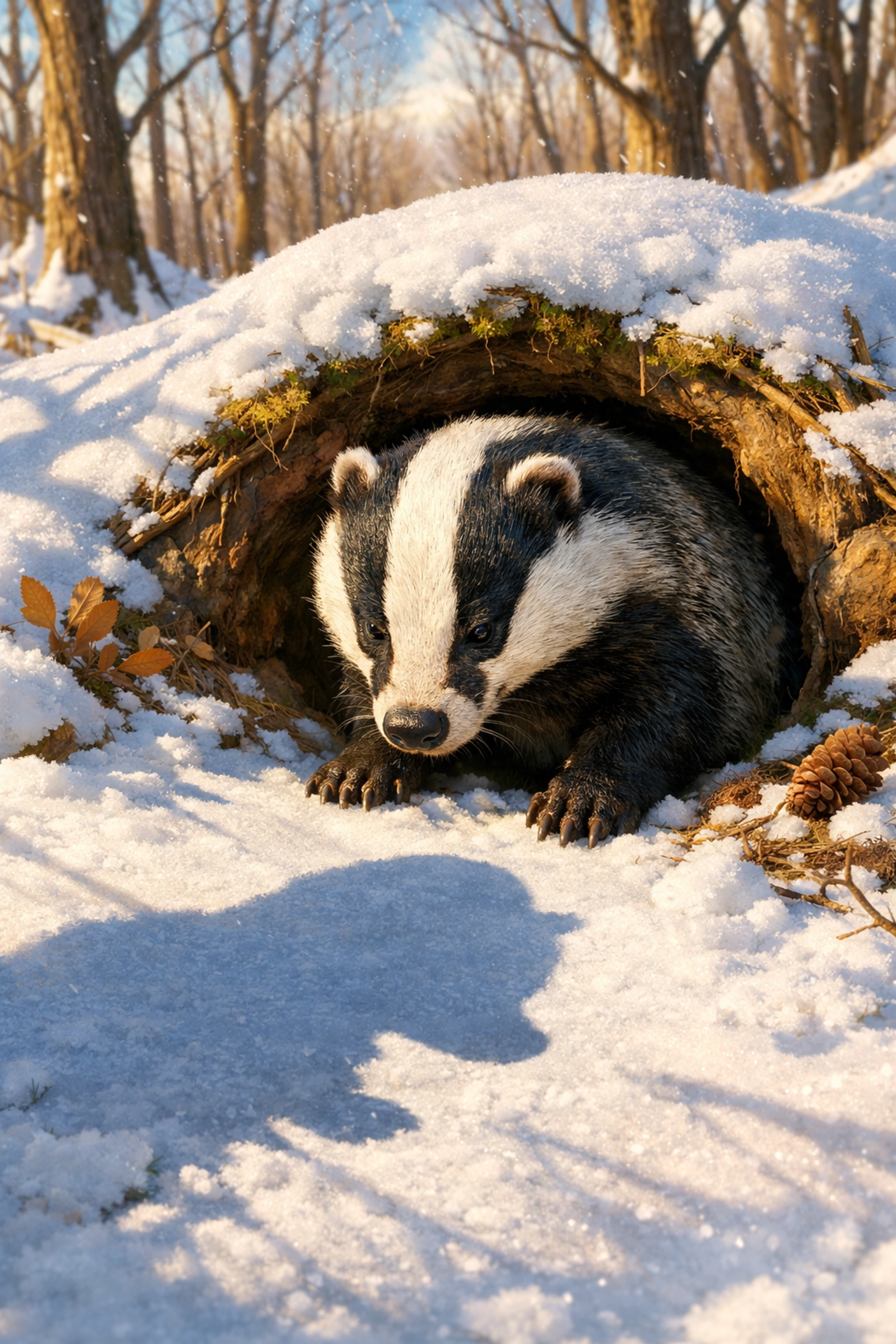
Here's where it gets properly weird. In medieval Germany, people decided that a badger was the perfect animal to predict the weather. Not just any badger, the specific badger that emerged from hibernation around February 2nd.
The Germans even had a name for it: Dachstag, or "Badger Day." A 1678 verse documented the tradition, and the logic was actually pretty solid. Badgers are small, shy, forest-dwelling hibernators. If a badger woke up, saw its shadow (meaning sunny weather), and scurried back into its den, it supposedly meant six more weeks of winter.
Why badgers? Honestly, mate, your guess is as good as mine. But the tradition stuck for centuries, passed down through German families like a treasured recipe for sauerkraut.
German Immigrants Bring It to America (But There's a Problem)
Between 1727 and 1775, waves of German settlers, often called the Pennsylvania Dutch, immigrated to Pennsylvania. They brought their language, customs, food traditions, and yes, their weather-predicting badger belief.
But here's the hitch: badgers aren't native to North America. Or at least, they weren't common in Pennsylvania. The settlers needed a substitute, and they found one burrowing around the local forests: the groundhog.
Groundhogs (also called woodchucks or whistle pigs) were perfect stand-ins. Like badgers, they hibernate, they're shy, and they emerge in early spring. The first recorded mention of groundhogs replacing badgers appears in an 1840 diary entry from a Welsh-American storekeeper who noted his German neighbors believed "if he sees his shadow he returns in and remains there 40 days."
The tradition had officially crossed the Atlantic and transformed. No worries about finding badgers: groundhogs would do just fine.
Punxsutawney Phil Steals the Spotlight
Fast forward to 1887. A group of friends in Punxsutawney, Pennsylvania: members of the local Elks Lodge and the Punxsutawney Groundhog Club: decided to take this folk custom and turn it into an event. They trekked out to a spot called Gobbler's Knob to consult a groundhog about the weather.
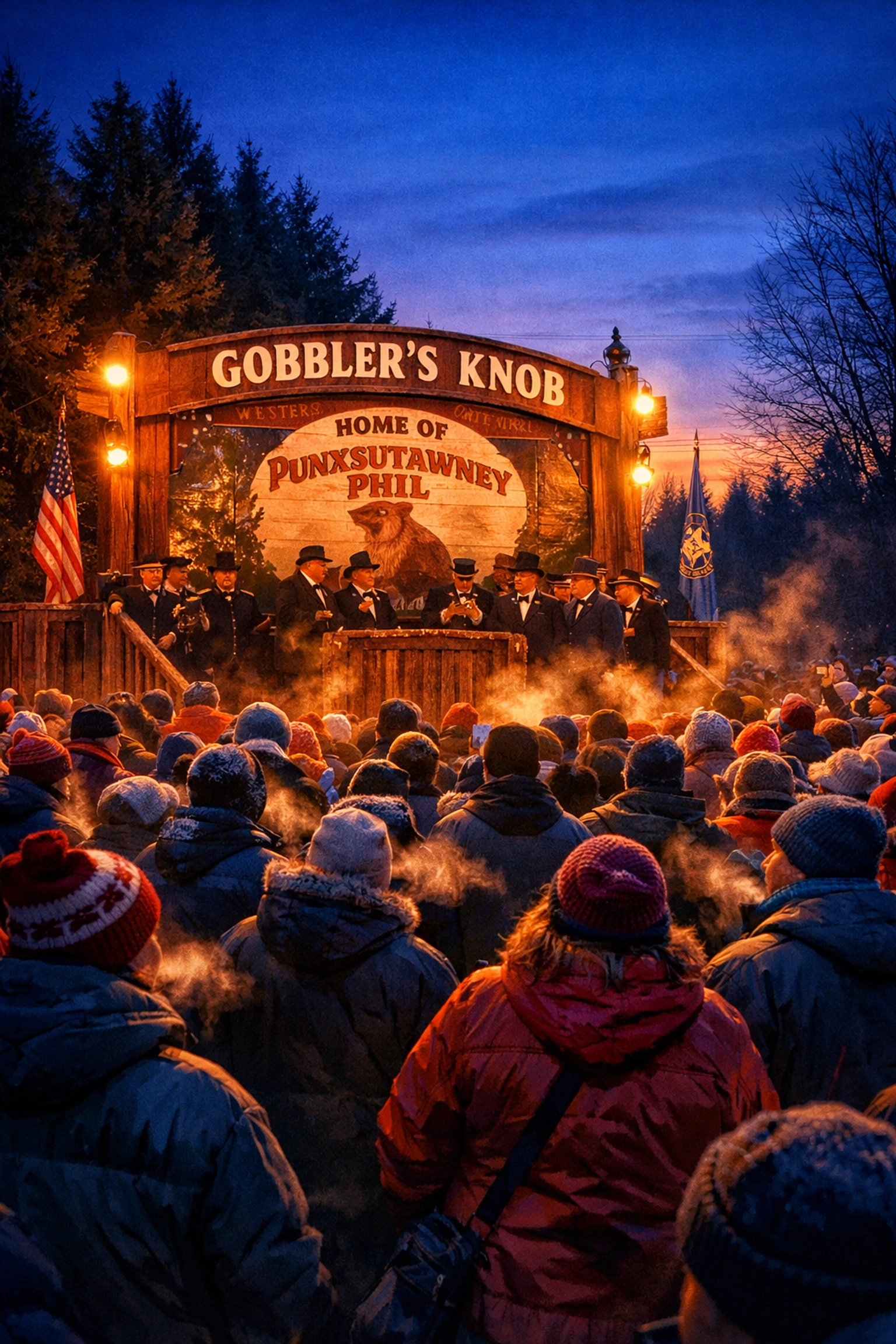
What started as a small, slightly ridiculous outing among friends has grown into a massive annual spectacle. Today, thousands of people gather at Gobbler's Knob before dawn on February 2nd, waiting for the famous groundhog to emerge.
The groundhog didn't even get the name "Punxsutawney Phil" until the 1960s, but once he did, he became a celebrity. According to the Inner Circle: the group of men in top hats and formal suits who "interpret" Phil's predictions: Phil speaks to them in "Groundhogese," telling them whether he saw his shadow or not.
It's theater. It's tradition. It's completely bonkers. And we absolutely love it.
What to Look Out For: The Shadow Rule
So how does this whole shadow thing actually work? Here's the breakdown:
If the groundhog sees his shadow:
It means the day is sunny and bright
According to tradition, this predicts six more weeks of winter
Phil (or any groundhog doing the predicting) goes back into his burrow
We all collectively groan and reach for another sweater
If the groundhog does NOT see his shadow:
It means the day is cloudy
This predicts an early spring
Phil stays above ground
We celebrate and start planning garden planting schedules
It's worth noting that Phil's accuracy rate is... not great. Studies suggest he's right about 39-40% of the time, which means you'd have better luck flipping a coin. But that's not really the point, is it? The fun is in the tradition, the gathering, the shared silliness of trusting a rodent with our weather hopes.
2026: Unanimous Shadow Sighting (Hello, 6 More Weeks of Winter)
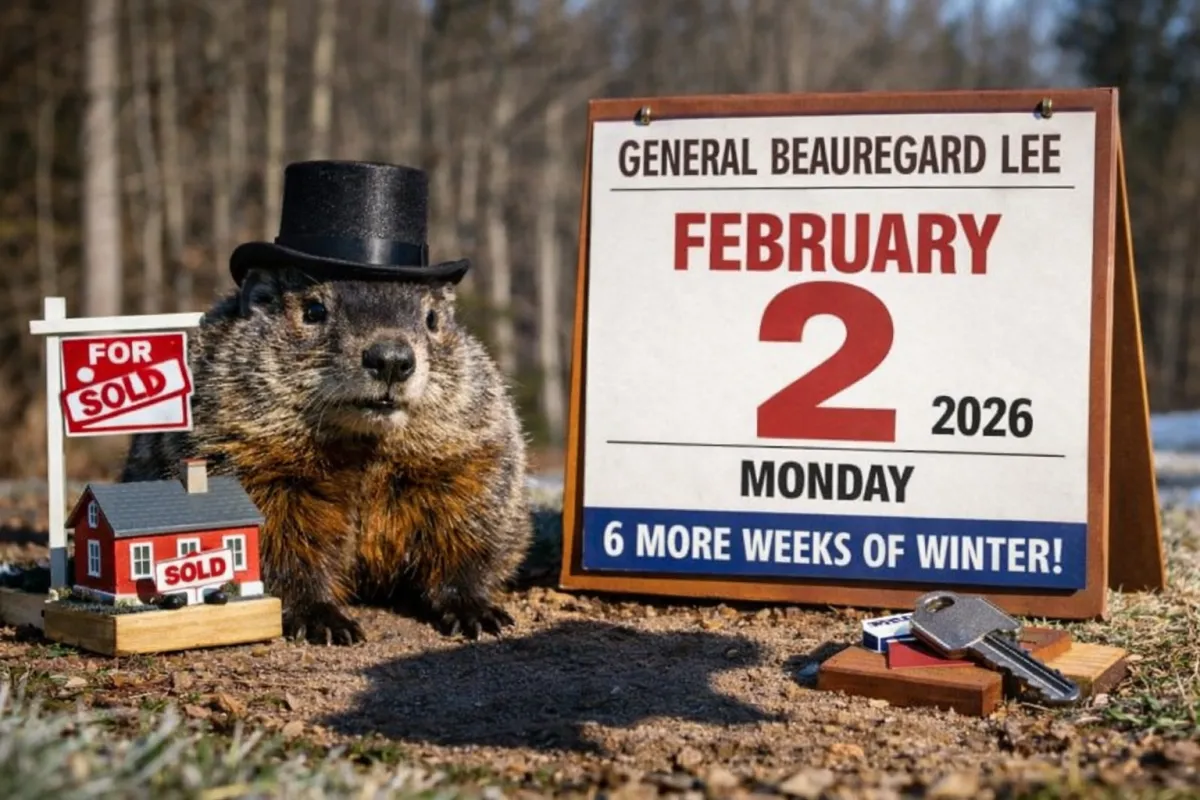
This morning, February 2, 2026, Punxsutawney Phil saw his shadow, which means we are officially signed up for six more weeks of winter.
And Phil is not the only fuzzy meteorologist committing to the bit this year.
Georgia's General Beauregard Lee (Dauset Trails Nature Center): Saw His Shadow
Down here in Georgia, General Beauregard Lee also saw his shadow on Feb 2, 2026, which means six more weeks of winter for the Peach State. No plot twist this time. Just a very confident groundhog doubling down on sweater weather.
Beau calls Dauset Trails Nature Center home in Jackson, GA, which is a really fun spot if you want an easy outdoorsy day with trails, lakes, and local wildlife.
And if you are anywhere near Gwinnett, here is a handy little reference: Jackson is about 1.5 hours from Mulberry, so it is totally a doable day trip. Go say hi to Beau, then treat yourself to lunch downtown and pretend you were there for the scenery, not the groundhog.
New York's Staten Island Chuck (Staten Island Zoo): Saw His Shadow
Up in New York, Staten Island Chuck also saw his shadow, representing from the Staten Island Zoo. Chuck has that big-city energy, like he is predicting six more weeks of winter while already double-parked and late for brunch.
So who is right?
For once, it is a total consensus.
Phil (Punxsutawney, PA): saw his shadow
Chuck (Staten Island Zoo, NY): saw his shadow
Beau (Jackson, GA): saw his shadow
That is a unanimous vote for six more weeks of winter. Honestly, it is kind of impressive. Getting three groundhogs to agree on anything feels harder than getting a group text to pick a dinner spot.
What this actually means for real estate (Georgia edition)
Here is the funny part. Winter weather does not pause the market. It just changes the timing and the competition.
For Sellers: Six more weeks of winter is the perfect window to get your home looking sharp before the spring rush actually hits. If you want top-dollar without the chaos, this is where my Renovate and Sell option or HomeOffersEZ program can shine. We can use the extra time to tackle the high-impact updates, tighten up the presentation, and hit the market ready to impress, no worries.
For Buyers: Do not wait for the flowers to bloom. The real estate feeding frenzy starts early regardless of the temperature. Great homes in great areas still move fast, and getting a plan together now (lender, timeline, must-haves, and a solid strategy) puts you ahead of the crowd when everyone else wakes up in March and decides they are ready.
Of course, groundhogs have been wrong before. But if three of them are all pointing at six more weeks of winter, I am at least keeping my jacket handy, mate.
Frequently Asked Questions
What is the significance of Groundhog Day in American culture?
Groundhog Day, celebrated on February 2nd, has become a quirky American tradition where people gather to see if a groundhog named Punxsutawney Phil will see his shadow. This event symbolizes the transition from winter to spring and reflects a lighthearted approach to weather prediction. It has evolved from ancient Celtic and German customs into a unique cultural phenomenon, showcasing community spirit and the joy of shared experiences, even if the accuracy of the predictions is questionable.
How did Groundhog Day evolve from its Celtic origins?
Groundhog Day has its roots in the ancient Celtic festival of Imbolc, which celebrated the midpoint between winter and spring. This festival honored the goddess Brigid and involved weather predictions based on the day's conditions. As Christianity spread, Imbolc transformed into Candlemas, maintaining the weather-watching tradition. Eventually, German immigrants brought their badger-based weather prediction customs to America, where the groundhog became the new weather oracle, leading to the modern celebration we know today.
Why do we use a groundhog instead of other animals for weather prediction?
The choice of a groundhog for weather prediction stems from the arrival of German immigrants in Pennsylvania, who needed a substitute for the badger, which is not native to North America. Groundhogs, also known as woodchucks, share similar hibernation habits and behaviors, making them a fitting replacement. Their emergence from hibernation around February 2nd aligns perfectly with the timing of the original badger tradition, allowing the custom to continue in a new form.
What happens if Punxsutawney Phil does not see his shadow?
If Punxsutawney Phil does not see his shadow, it indicates a cloudy day, which traditionally predicts an early spring. In this scenario, Phil remains above ground, and the community celebrates the prospect of warmer weather. This outcome is met with excitement as it signifies the end of winter, prompting people to start planning for spring activities, such as gardening and outdoor events, despite Phil's overall accuracy rate being around 39-40%.
How accurate are the predictions made by Punxsutawney Phil?
Punxsutawney Phil's predictions are not particularly reliable, with studies suggesting an accuracy rate of only 39-40%. This means that trusting a groundhog for weather forecasts is more about tradition and fun than scientific accuracy. The event serves as a lighthearted way to engage with the community and celebrate the changing seasons, rather than a serious meteorological prediction. The joy of the celebration often outweighs the actual weather outcomes.
Are there other groundhogs that participate in similar traditions?
Yes, several other groundhogs across the United States participate in similar weather prediction traditions. Notable examples include Staten Island Chuck in New York and General Beauregard Lee in Georgia. Each of these groundhogs has their own local following and traditions, contributing to the broader cultural phenomenon of Groundhog Day. These regional celebrations highlight the fun and community spirit associated with the quirky practice of animal-based weather forecasting.
What should people do if they want to participate in Groundhog Day celebrations?
To participate in Groundhog Day celebrations, individuals can attend local events or travel to Punxsutawney, Pennsylvania, for the main festivities. Many communities host their own gatherings, complete with food, entertainment, and activities centered around the groundhog's prediction. Engaging with friends and family during this lighthearted event can enhance the experience. Additionally, sharing the tradition through social media or local gatherings can help keep the spirit of Groundhog Day alive and foster community connections.
Final Thoughts
Groundhog Day is a beautiful mess of history, folklore, and rodent-based meteorology. While it’s definitely not a science, it’s a fun tradition that brings a bit of silliness to our winter mornings.
With all three heavy-hitters, Phil, Chuck, and our own General Beauregard Lee, in total agreement that we’ve got six more weeks of winter ahead, it’s a rare moment of rodent unity. Whether you’re ready to bundle up or you’re already counting down the days until spring, remember that this "extra" winter time is the perfect window to get your real estate plans in motion.
If you’re thinking about making a move this season, whether you’re downsizing, upgrading, or relocating to our neck of the woods in Georgia, don’t wait for the weather to warm up. I’m here to help you get ahead of the spring rush with solid guidance and a stress-free process.
Cheers to the groundhogs, to staying cozy for a few more weeks, and to making your next move your best move.
Check-out the full video here of the procalmation - General Beau predicts


